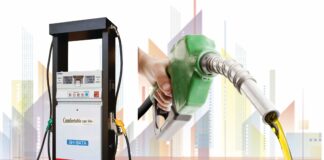
The State House statement on Alhaji Atiku Abubakar’s proposal to restore petrol subsidy raises an important economic question. But the debate should move beyond political labels and focus on economics: who pays, who benefits, and whether the policy is sustainable.
From a petroleum economics perspective, the issue is not simply whether subsidy is good or bad. The real question is whether subsidising petrol consumption is the most efficient, equitable and fiscally sustainable way of protecting Nigerians from energy-price shocks.
Nigeria’s experience demonstrates the dangers of an open-ended subsidy regime. When government sells petroleum products below their economic cost, the difference does not disappear. It is ultimately borne by government revenues, taxpayers, public borrowing or reduced spending on other priorities.
Therefore, anyone proposing subsidy restoration should provide the numbers: How much per litre? What annual fiscal cost? Who pays? How will it be funded, monitored and eventually exited?
But the argument should also be balanced. Subsidy removal has real welfare costs. Higher petrol prices can raise transportation, logistics, food and production costs, particularly in an economy heavily dependent on road transport. Fiscal savings do not automatically translate into welfare gains unless they are converted into productive investment, infrastructure and effective social protection.

Nigeria’s growing domestic refining capacity is a major opportunity. Dangote and other refineries can reduce dependence on imported products, conserve foreign exchange and deepen domestic value addition. But domestic refining does not automatically mean cheap petrol. Crude has an opportunity cost, while refining, financing, logistics, distribution and regulatory costs remain part of the economic cost of supply.
Nor should Nigeria simply replace an import-dependent distortion with a domestic market structure that permits excessive market power. The objective should be competition, not merely localisation. A universal petrol subsidy is also a blunt instrument for poverty alleviation. Those who consume more petrol receive more subsidy. Targeted transport support, CNG adoption, public transportation investment and carefully designed social protection may deliver greater welfare per naira spent.

Equally, claims about the precise savings from subsidy removal or the direct relationship between subsidy abolition and higher Federation Account allocations should be supported by transparent fiscal accounting. Petroleum economics requires evidence, not convenient attribution.
The better national conversation is therefore not “subsidy versus no subsidy.” It is:
What is the most efficient and equitable way to make energy affordable while protecting investment, government finances and long-term energy security?
If Atiku proposes subsidy restoration, Nigerians deserve the fiscal model. If the Tinubu administration defends subsidy removal, Nigerians deserve to see how the savings are being converted into broader economic welfare.

Nigeria’s objective should not be cheap petrol at any cost, nor expensive petrol in the name of reform. It should be efficient, competitive and sustainable petroleum markets, complemented by targeted protection for citizens who genuinely need it.

Petroleum policy should ultimately be judged by efficiency, effectiveness, equity and ethics—not by political allegiance.
Wumi Iledare, PE of PE
Snr Fellow, USAEE
Fellow NAEE, Fellow EI

CONTACT AGTV/ Magazine
For your photography, videography. 360 Camera boot & all multimedia services: Live Streaming, Drone flying ,LED screen Renting , Event Management, Lighting, DJ Sound,.printing & Branding Call +2348084961511 +2348037987218.
We are Open for Business and ready to work with you!