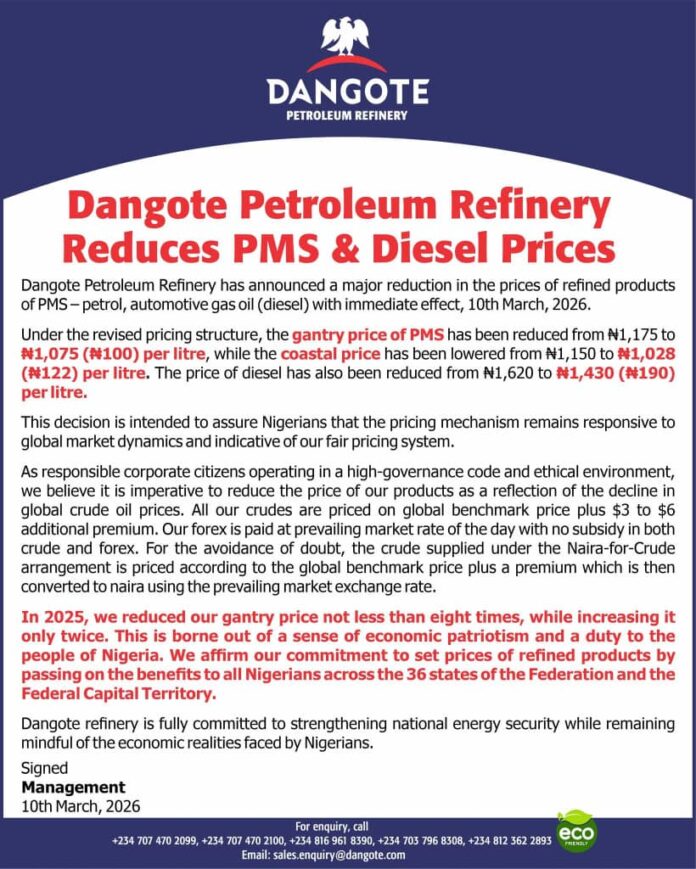
Policy Perspective: Market Power, Pricing Signals and the Intent of the PIA
The Petroleum Industry Act (PIA) was enacted, among other objectives, to liberalise the downstream petroleum market, promote competition, enhance efficiency, and protect consumer welfare. A key policy concern arises when a market participant attains the scale, integration advantages, and logistical reach sufficient to materially influence market output, pricing behaviour, and expectations.
In such a market structure, public price signalling through media announcements, while not inherently unlawful, may have strategic competitive implications. In oligopolistic or highly concentrated markets, pricing communication can shape market coordination dynamics, entry conditions, and competitive responses.
Without clearly articulated market-conduct rules, transparency standards, and competition safeguards, there is a risk that price leadership could evolve into de facto price dominance, potentially undermining the competitive intent of the PIA.
From a regulatory policy standpoint, this underscores the need for:
- Robust market surveillance mechanisms to monitor pricing behaviour and market concentration trends.
- Guidelines on commercial communication and price disclosure practices to prevent implicit coordination or consumer misinformation.
- Competition-aligned regulatory instruments that balance investment incentives with safeguards against market power abuse.
- Transparent pricing frameworks that enable consumers and smaller market participants to make informed decisions.
Ultimately, the sustainability of downstream liberalisation depends not only on investment and supply security but also on credible competition governance. Ensuring that efficiency gains from large-scale refining translate into broad-based consumer welfare and market contestability remains central to the long-term success of the PIA framework.
Wumi Iledare, Professor Emeritus of Petroleum Economics at LSU Energy Institute and Executive Director, Emmanurl Egbogah Foundation, Abuja