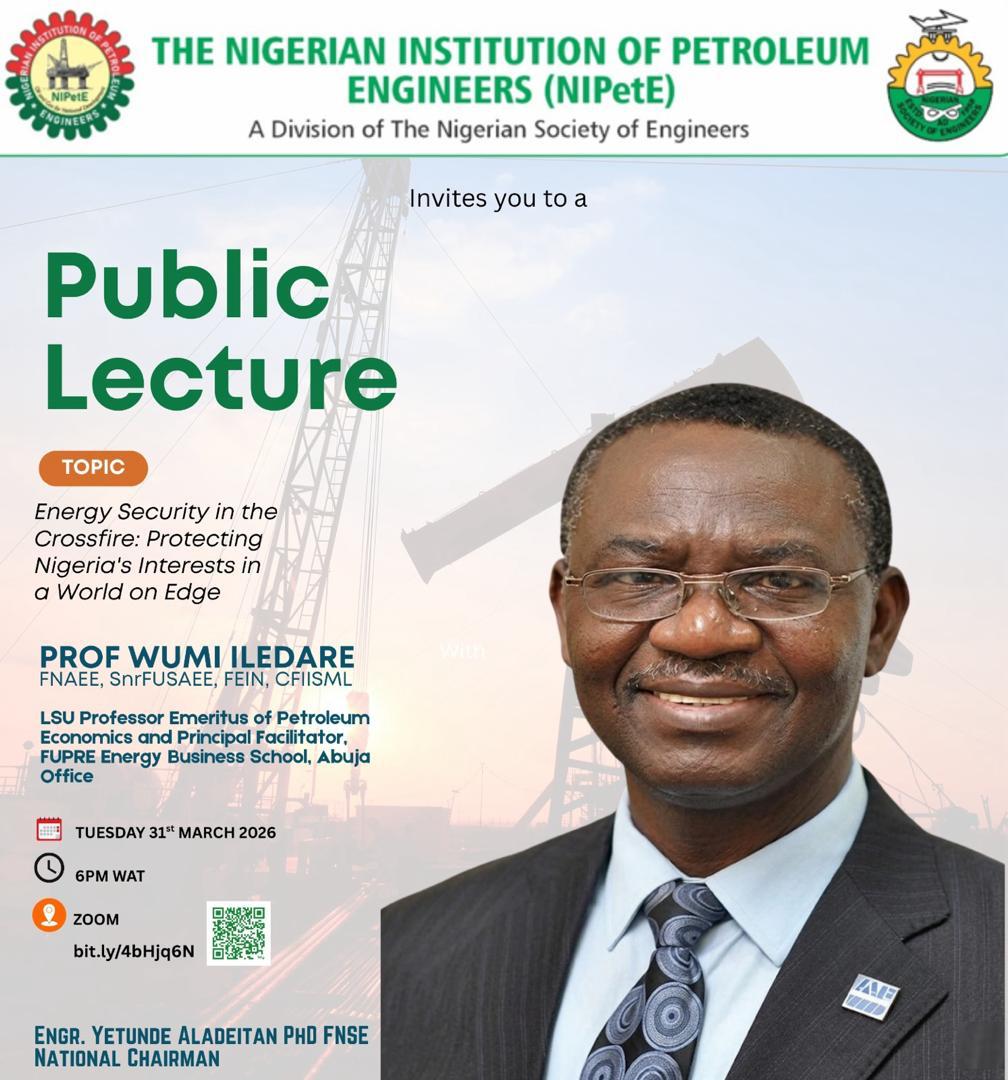
FIX THE SYSTEM, NOT THE RESOURCES: NIGERIA’S ENERGY SECURITY IMPERATIVE…
In the aftermath of the Nigerian Institution of Petroleum Engineers (NIPetE) Public Lecture on “Energy Security in the Crossfire: Protecting Nigeria’s Interests in a World on Edge,” a central message has emerged with clarity: the global energy conversation is shifting from aspiration to reality. While energy transition remains important, energy security has firmly returned to the forefront of policy and strategy.
The global energy system is increasingly defined by geopolitical tensions, market volatility, and fragmented supply chains. In this environment, countries are not merely pursuing cleaner energy—they are prioritizing reliable, affordable, and resilient energy systems.
For Nigeria, this shift presents both a challenge and an opportunity.
Despite vast oil and gas resources, Nigeria continues to grapple with fuel import dependence, unreliable electricity supply, and underutilized gas reserves. This paradox underscores a fundamental issue: the problem is not resource availability, but system performance.
Nigeria is not energy poor—it is energy inefficient.
This inefficiency is rooted in structural and institutional weaknesses across the energy value chain. While the upstream sector remains resource-rich, this strength does not translate into downstream value or power sector reliability. The gas-to-power value chain, in particular, highlights a disconnect driven by pricing misalignment, weak contract enforcement, and infrastructure gaps.
Equally important is the need to move beyond the false dichotomy between natural gas and renewable energy. Energy transitions are additive, not substitutive. Gas provides the stability required for power generation and industrial growth, while renewables expand access and support long-term sustainability. The strategic imperative is to design an integrated energy system that leverages both.
At its core, Nigeria’s energy challenge is one of governance, not geology.
Sustainable progress will depend on policy credibility, regulatory clarity, and consistent implementation. While reforms such as the Petroleum Industry Act provide a framework for transformation, their impact will ultimately be determined by execution.
In a rapidly evolving global landscape, energy security must also be viewed through the lens of sovereignty—the ability of a nation to exercise strategic control over its energy systems. This underscores the importance of strengthening institutions, integrating the energy value chain, and aligning policy with long-term development goals.
The path forward is clear. Nigeria must transition from resource extraction to value creation, from policy intent to policy credibility, and from fragmented systems to integrated energy solutions.
Energy security is not about how much resource a country possesses. It is about how effectively those resources are converted into reliable, affordable, and resilient systems.
This is not a resource problem. It is a systems problem.
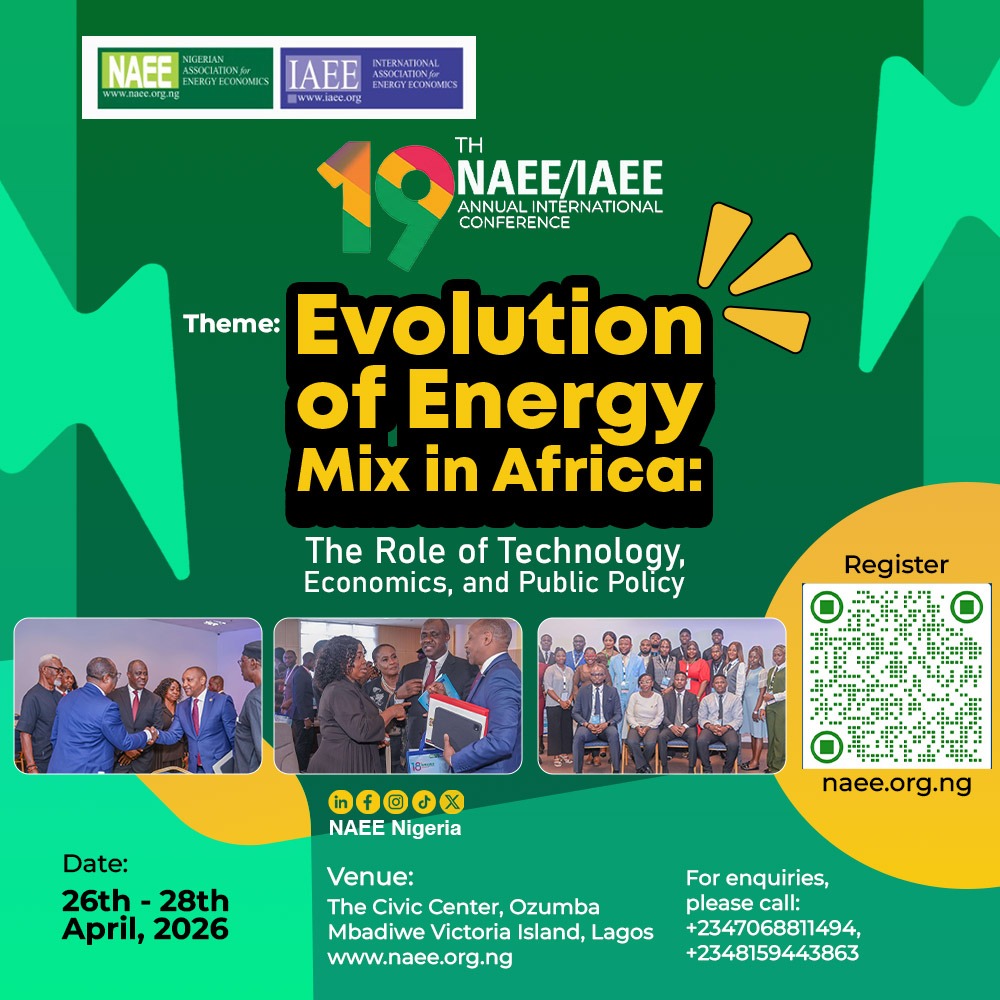
Join a dynamic network of industry leaders, policymakers, academics, and innovators as they explore the evolving energy landscape in Africa.
Be part of critical conversations shaping the future of energy, technology, and policy across the continent.
This is your opportunity to connect, learn, and contribute to meaningful change.
Visit: www.naee.org.ng to register now!
naee #naeeconference2026
naee2026
energydiscussion #energyeconomics


AGTV/ Magazine
For your photography, videography. 360 Camera boot & all multimedia services: Live Streaming, Drone flying ,LED screen Renting , Event Management, Lighting, DJ Sound,.printing & Branding Call +2348084961511 +2348037987218.
We are Open for Business with You